 By Admin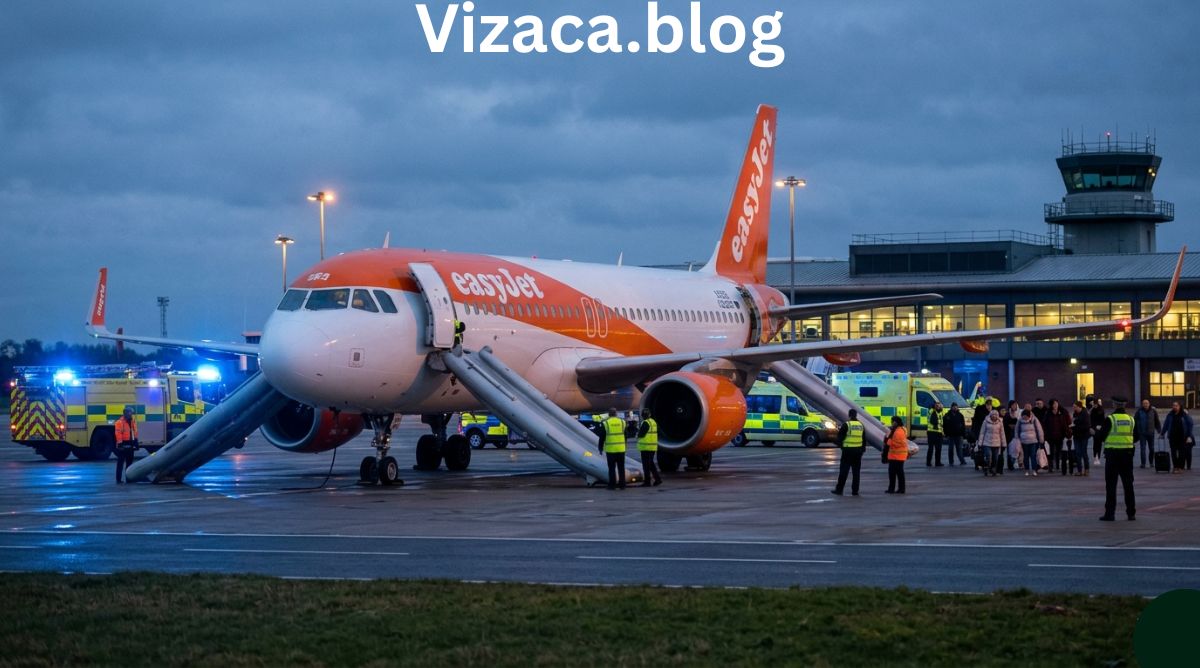
Overview of easyjet flight u2238 emergency landing newcastle
An emergency landing involving a commercial aircraft is a rare but carefully managed aviation event where a flight is forced to divert from its original route and land at an alternative airport due to safety concerns. In the case of easyJet flight U2238 emergency landing Newcastle, such a scenario represents the activation of strict safety protocols designed to protect passengers, crew, and the aircraft. EasyJet is a major European airline operating thousands of flights across multiple destinations daily, and any emergency situation is treated with the highest level of seriousness by both the airline and aviation authorities.
Newcastle International Airport often serves as a diversion airport for flights operating in the United Kingdom and nearby airspace due to its infrastructure, runway capacity, and emergency handling facilities. When an aircraft such as flight U2238 makes an unscheduled landing, it typically involves coordination between air traffic control, the flight crew, and ground emergency services.
What an emergency landing means in aviation
An emergency landing is a precautionary or urgent landing made when continuing the flight is considered unsafe. In commercial aviation, pilots are trained extensively to handle such situations using standardized procedures regulated by the aviation industry.
There are generally two types of emergency landings. The first is a precautionary landing, where a potential issue is detected early, such as a technical fault or unusual system reading. The second is a forced landing, where an immediate landing is required due to a critical situation like engine failure or cabin pressure loss.
In all cases, the primary objective is passenger safety. Modern aircraft are built with multiple redundant systems, meaning even if one system fails, others can support safe operation until landing.
Possible reasons behind flight diversions and emergency landings
There are several reasons why a flight like easyJet flight U2238 emergency landing Newcastle might occur. One of the most common causes is technical or mechanical issues. These may include engine warnings, hydraulic system irregularities, or electronic system alerts detected during flight.
Another possible reason is medical emergencies onboard. If a passenger or crew member experiences a serious health issue, pilots may divert to the nearest suitable airport with medical facilities.
Weather conditions can also play a role. Severe turbulence, storms, or sudden changes in wind conditions may force pilots to choose an alternative landing location.
Cabin pressure issues, smoke detection alerts, or communication system faults are other potential causes that may lead to emergency diversion decisions.
Role of Newcastle Airport in emergency landings
Newcastle International Airport plays an important role as a diversion airport in the United Kingdom’s aviation network. Its location and infrastructure make it suitable for handling emergency landings for both domestic and international flights.
The airport is equipped with emergency response teams, fire and rescue services, and medical assistance units that are prepared to respond immediately when an aircraft declares an emergency.
Air traffic controllers at Newcastle coordinate closely with incoming flights during diversions to ensure safe runway clearance and priority landing. Ground teams are also responsible for guiding passengers and assisting airline crews after landing.
Passenger experience during an emergency landing
For passengers onboard a flight experiencing an emergency landing, the situation can be stressful and uncertain. However, airline crews are trained to maintain calm and provide clear instructions throughout the process.
Passengers are usually informed by the captain or cabin crew if a diversion is necessary. Safety demonstrations and instructions are reinforced to ensure compliance with landing procedures.
During descent and landing, cabin crew secure the cabin, ensure seatbelts are fastened, and prepare passengers for a safe landing. Despite the tension, most emergency landings conclude without harm due to strict safety protocols.
After landing, passengers are typically guided to terminal areas where they receive updates, assistance, and onward travel arrangements if required.
Pilot decision-making and aviation safety protocols
Pilots operating commercial flights like easyJet flight U2238 are highly trained professionals responsible for making critical decisions during emergencies. Their training includes simulator exercises that replicate various emergency scenarios.
When an issue arises, pilots follow a structured decision-making process. They communicate with air traffic control, assess the severity of the situation, and determine the safest possible course of action.
Modern aircraft systems provide real-time data that helps pilots evaluate risks. If necessary, the aircraft’s route is altered, and a diversion airport like Newcastle is selected based on proximity and suitability.
Aviation safety protocols prioritize caution over speed, ensuring that every decision is made with passenger safety as the highest priority.
Aircraft systems and safety technology
Commercial aircraft used by airlines like easyJet are equipped with advanced safety systems designed to prevent and manage emergencies. These systems include multiple engine monitoring tools, automated warning alerts, and backup navigation systems.
If a malfunction occurs, the aircraft’s onboard computers immediately notify the pilots, allowing them to take corrective action.
Additionally, aircraft are designed to continue flying safely even if one system fails. This redundancy is a core principle of modern aviation engineering.
Communication systems also allow pilots to stay in constant contact with air traffic control and airline operations centers during emergencies.
Investigation process after emergency landings
After an incident like easyJet flight U2238 emergency landing Newcastle, aviation authorities typically conduct a detailed investigation. The goal is to determine the cause of the diversion and ensure that safety standards were met.
Investigations are usually carried out by national aviation safety organizations in collaboration with the airline and aircraft manufacturer.
Data from flight recorders, cockpit voice recordings, and maintenance logs are analyzed to reconstruct the events leading to the emergency landing.
If a technical issue is identified, maintenance procedures are reviewed and updated if necessary to prevent similar incidents in the future.
Impact on airline operations and passengers
Emergency landings can affect airline schedules and operations. Flights may be delayed, rerouted, or canceled depending on the situation.
For passengers, airlines typically provide assistance such as accommodation, alternative flights, or compensation depending on the circumstances.
Airlines like easyJet follow strict customer service policies to ensure that affected passengers are supported during disruptions.
While such incidents can be inconvenient, they are also a demonstration of the aviation industry’s commitment to safety over schedule adherence.
Importance of safety culture in aviation
The aviation industry is built on a strong safety culture where risk prevention and management are top priorities. Events like emergency landings highlight the effectiveness of this system.
Every incident is treated as an opportunity to learn and improve. Continuous training, technological upgrades, and regulatory oversight ensure that safety standards remain extremely high.
Airlines, pilots, engineers, and air traffic controllers all work together to maintain a safe flying environment for passengers worldwide.
Conclusion
The easyJet flight U2238 emergency landing Newcastle represents a scenario that highlights the complexity and safety focus of modern aviation. While emergency landings may cause concern among passengers, they are a standard part of aviation safety procedures designed to protect lives.
From pilot decision-making to airport emergency response and post-landing investigations, every step is carefully managed to ensure safety and continuous improvement.
Such events demonstrate that despite the challenges of air travel, the aviation industry remains one of the safest modes of transportation due to its strict protocols, advanced technology, and highly trained professionals.