 By Admin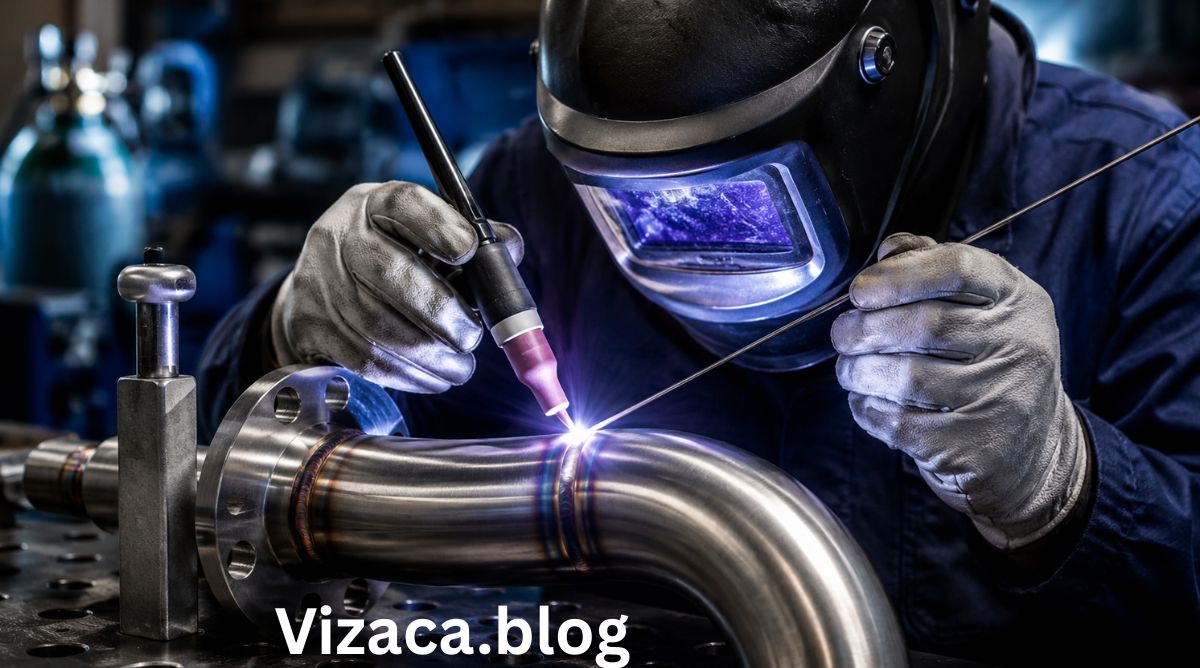
Understanding gas tungsten arc welding services and industrial applications
Gas tungsten arc welding services refer to a specialized welding process used in manufacturing and fabrication industries where precision, strength, and high-quality welds are required. This process is commonly known for producing clean, accurate, and strong weld joints, especially in materials that require careful heat control such as stainless steel, aluminum, magnesium, and other non-ferrous metals.
Within the field of Welding Engineering, gas tungsten arc welding is considered one of the most precise welding techniques available. It uses a non-consumable tungsten electrode to produce the weld, while a shielding gas protects the weld area from atmospheric contamination.
Gas tungsten arc welding services are widely used in industries such as aerospace, automotive, construction, shipbuilding, and precision manufacturing. These services are essential where weld quality cannot be compromised and where structural integrity is critical.
How gas tungsten arc welding works in professional services
Gas tungsten arc welding operates by creating an electric arc between a tungsten electrode and the workpiece. This arc generates intense heat that melts the base metal, allowing two pieces to be fused together.
A shielding gas, typically argon or helium, is used to protect the weld area from oxygen and nitrogen in the air. This prevents contamination and ensures a clean, high-quality weld.
In professional gas tungsten arc welding services, skilled technicians carefully control the welding parameters such as current, voltage, and shielding gas flow. This level of control is what makes the process suitable for precision applications.
Within Welding Engineering, this process is valued for its ability to produce defect-free welds with excellent mechanical properties.
Key components used in gas tungsten arc welding
Gas tungsten arc welding involves several essential components that work together to produce accurate and reliable welds.
The tungsten electrode is the core element that generates the arc. It does not melt during the process, which allows for consistent performance.
The shielding gas system protects the weld area from atmospheric contamination. This is critical for maintaining weld purity and strength.
The power supply provides controlled electrical current to generate the arc. Different settings are used depending on the material and thickness being welded.
Filler material may also be added manually when additional strength or volume is required in the weld joint.
Within Welding Engineering, each component plays a crucial role in ensuring weld quality and consistency.
Advantages of gas tungsten arc welding services
Gas tungsten arc welding services offer several important advantages that make them suitable for high-precision industries.
One of the main advantages is the high level of control over the welding process. This allows welders to create precise and clean welds even on thin or delicate materials.
Another advantage is the quality of the weld. Gas tungsten arc welding produces strong, durable joints with minimal defects such as porosity or spatter.
The process is also highly versatile and can be used on a wide range of metals, including stainless steel, aluminum, copper alloys, and nickel-based materials.
Within Welding Engineering, this process is considered ideal for applications requiring aesthetic and structural precision.
Industrial applications of gas tungsten arc welding services
Gas tungsten arc welding services are used in a variety of industries where precision and reliability are essential.
In the aerospace industry, this welding process is used to fabricate aircraft components that must withstand extreme conditions while maintaining lightweight properties.
In the automotive industry, it is used for manufacturing exhaust systems, chassis components, and specialized vehicle parts.
In the construction industry, gas tungsten arc welding is used for stainless steel structures, architectural designs, and infrastructure projects.
In shipbuilding, it is used to weld critical components that must resist corrosion and high stress in marine environments.
Within Welding Engineering, these applications highlight the importance of precision welding in modern engineering.
Role of shielding gases in welding quality
Shielding gases play a vital role in gas tungsten arc welding services. Their primary function is to protect the weld area from atmospheric gases that can cause contamination.
Argon is the most commonly used shielding gas because it provides stable arc performance and excellent protection. Helium is sometimes used to increase heat input for thicker materials.
The choice of shielding gas depends on the material being welded and the desired weld characteristics.
Within Welding Engineering, shielding technology is a key factor in achieving high-quality welds.
Importance of skill and expertise in welding services
Gas tungsten arc welding requires a high level of skill and training. Unlike some automated welding processes, it often involves manual control of the torch and filler material.
Welders must have steady hand coordination, technical knowledge, and experience to produce consistent results.
Professional gas tungsten arc welding services rely on certified technicians who understand material behavior, heat control, and welding techniques.
Within Welding Engineering, operator skill is considered as important as equipment quality in achieving optimal results.
Safety measures in gas tungsten arc welding
Safety is a critical aspect of gas tungsten arc welding services. The process involves high temperatures, electrical currents, and potentially harmful fumes.
Proper protective equipment such as welding helmets, gloves, and protective clothing is essential to prevent injuries.
Adequate ventilation is also necessary to avoid exposure to welding fumes.
Within Occupational Safety, welding safety standards are established to protect workers and ensure safe industrial practices.
Following safety protocols reduces risks and ensures a controlled working environment.
Challenges in gas tungsten arc welding services
Despite its advantages, gas tungsten arc welding also presents certain challenges.
One of the main challenges is the slower welding speed compared to other welding methods. This makes it less suitable for high-volume production.
Another challenge is the requirement for high skill levels, which can limit its use in some industries.
The process also requires clean working conditions, as contamination can affect weld quality.
Within Welding Engineering, these challenges are addressed through training, automation, and improved equipment design.
Technological advancements in welding services
Modern gas tungsten arc welding services have benefited from technological advancements such as automated welding systems and improved power supplies.
Automation helps improve consistency and reduce human error, especially in large-scale industrial applications.
Advanced welding machines now offer better control over parameters such as current modulation and arc stability.
Within Welding Engineering, innovation continues to enhance efficiency, precision, and safety in welding processes.
Environmental considerations in welding processes
Environmental factors are increasingly important in industrial welding services. Gas tungsten arc welding is relatively clean compared to other welding methods, but it still produces heat, fumes, and energy consumption.
Efforts are being made to improve energy efficiency and reduce emissions in welding operations.
Proper waste management and use of eco-friendly materials also contribute to sustainable welding practices.
Within Environmental Engineering, reducing industrial impact is a key focus area.
Future of gas tungsten arc welding services
The future of gas tungsten arc welding services is expected to involve greater automation, improved materials, and enhanced precision technologies.
Integration with robotics and computer-controlled systems will likely increase efficiency and consistency in welding operations.
New materials and advanced alloys will also require more sophisticated welding techniques.
Within Welding Engineering, ongoing research continues to improve welding performance and adaptability.
Conclusion
Gas tungsten arc welding services represent a highly precise and reliable method of metal joining used across multiple industries. Within the framework of Welding Engineering and Occupational Safety, this process is valued for its accuracy, strength, and versatility.
From aerospace to automotive manufacturing, this welding technique plays a crucial role in producing high-quality components. Despite certain challenges such as slower speed and skill requirements, its advantages make it essential in precision engineering applications.
As technology continues to evolve, gas tungsten arc welding services are expected to become even more efficient, automated, and environmentally sustainable, ensuring their continued importance in modern industrial development.