 By Admin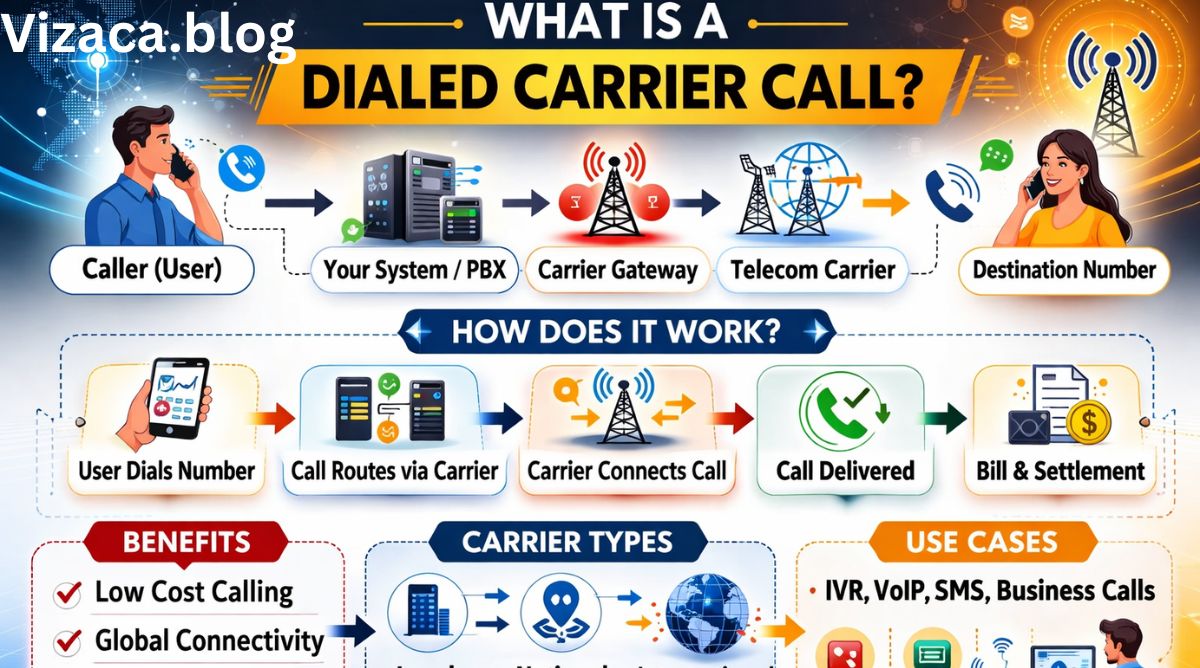
Introduction to What Is a Dialed Carrier Call
When people review their phone bill or call history, they sometimes notice unfamiliar terms that create confusion. One such term is dialed carrier call. Understanding what is a dialed carrier call is important for anyone who uses a mobile phone or landline service. This term generally refers to a call that is routed through a specific telecommunications carrier chosen by the user, either manually or automatically, to complete the connection.
In simple words, a dialed carrier call occurs when a person makes a phone call using a selected carrier network instead of relying solely on the default service provider. This may happen in situations involving long-distance calls, international calls, calling cards, or alternative service providers offering competitive rates. Knowing what is a dialed carrier call helps users better understand billing statements, charges, and call routing processes.
Understanding the Meaning of What Is a Dialed Carrier Call
To fully understand what is a dialed carrier call, it is important to know how telephone networks function. When a call is placed, the signal must travel from the caller’s phone to the recipient’s phone. This journey involves telecommunication carriers, which operate the infrastructure that connects calls across cities, states, or countries.
A dialed carrier call specifically means that the caller dialed a number in a way that selected a particular carrier to handle the call. In some systems, users can choose a carrier by dialing a special access code before the main phone number. This instructs the system to route the call through that chosen carrier instead of the default provider.
This practice is more common in landline services and certain business phone systems, but it can also apply to mobile networks under specific circumstances.
How Dialed Carrier Calls Work
Understanding what is a dialed carrier call requires knowledge of how call routing works. When you dial a number, your call is transmitted to your service provider’s switching system. If you use a carrier selection code, the switching system recognizes that you want the call routed through a specific carrier.
The selected carrier then handles the transmission of the call to its destination. This can affect the cost, call quality, and billing method. Some carriers specialize in long-distance or international routes and may offer lower rates compared to default providers.
In certain cases, users may not even realize they are making a dialed carrier call, especially if their phone system automatically selects a carrier for specific types of calls.
Why Dialed Carrier Calls Appear on Phone Bills
Many people first encounter the term while reviewing billing statements. They may see “dialed carrier call” listed next to certain charges and wonder what it means. The reason this term appears is because the call was routed through a specific carrier rather than the primary service provider.
Billing systems differentiate between standard calls and dialed carrier calls to maintain transparency. Charges may vary depending on the carrier used, the destination of the call, and the duration.
Understanding what is a dialed carrier call can help prevent confusion and disputes about unexpected charges on monthly statements.
Dialed Carrier Calls and Long-Distance Services
One common scenario involving what is a dialed carrier call relates to long-distance communication. Before mobile phones became dominant, landline users often selected specific long-distance carriers by dialing access codes.
For example, someone might dial a carrier prefix before entering an international number to take advantage of cheaper rates. This action creates a dialed carrier call because the user manually selected the carrier.
Although technology has advanced, similar processes still exist in certain business or specialized communication setups.
Dialed Carrier Calls in Mobile Networks
In modern mobile networks, most calls are automatically handled by the user’s service provider. However, situations still arise where what is a dialed carrier call becomes relevant.
For example, when using calling cards or third-party international calling services, the user may dial an access number that connects them to a different carrier. The call is then routed through that carrier’s network.
Some mobile billing statements reflect this by labeling the call as a dialed carrier call. This helps users understand that the call did not follow the standard routing process.
Business Use of Dialed Carrier Calls
Businesses often use multiple carriers to optimize costs and performance. In such environments, understanding what is a dialed carrier call is essential.
Companies may configure their phone systems to automatically select different carriers based on destination, time of day, or call type. For example, international calls might be routed through a specialized carrier offering better rates.
Employees placing calls may not notice the difference, but billing systems record these as dialed carrier calls for accounting purposes.
Security and Dialed Carrier Calls
Security considerations are also important when discussing what is a dialed carrier call. Some fraudulent schemes involve unauthorized carrier changes or deceptive dialing methods that route calls through expensive services.
Users should monitor their billing statements for unfamiliar dialed carrier call charges. If unexpected charges appear, contacting the service provider for clarification is recommended.
Understanding the term helps users identify legitimate charges versus potential billing errors or scams.
Differences Between Standard Calls and Dialed Carrier Calls
A standard call is automatically routed through the default service provider associated with your phone account. In contrast, what is a dialed carrier call refers to a call intentionally or systemically routed through a different carrier.
The key difference lies in carrier selection. Standard calls require no additional input from the user, while dialed carrier calls involve either manual selection or system-level configuration.
This distinction affects billing, call routing, and sometimes pricing structures.
International Calling and Dialed Carrier Calls
International communication frequently involves scenarios explaining what is a dialed carrier call. Many users choose third-party international carriers for lower rates.
They may dial a special access number before entering the destination number. The call then travels through the chosen carrier’s network rather than the default provider.
This process often results in a dialed carrier call entry on the billing statement.
Common Reasons for Making Dialed Carrier Calls
There are several reasons people make dialed carrier calls. One reason is cost savings, especially for long-distance or international calls. Another reason is improved call quality in certain regions.
Businesses may use dialed carrier calls to manage communication expenses strategically. Some individuals may use calling cards that require dialing through a specific carrier.
Understanding what is a dialed carrier call clarifies these situations and reduces confusion.
Troubleshooting Unexpected Dialed Carrier Call Charges
If someone notices unexpected charges labeled as dialed carrier call, there are several steps they can take. First, review call history and confirm whether a special access number was dialed.
Second, contact the service provider to request detailed billing information. Sometimes, billing systems categorize certain calls differently based on routing methods.
Third, check whether any third-party services or calling cards were used. These often result in dialed carrier call entries.
Evolution of Dialed Carrier Calls in Modern Telecommunications
With the growth of mobile technology and internet-based communication, the concept of what is a dialed carrier call has evolved. Many carriers now operate seamlessly in the background, making manual selection less common.
However, the underlying concept remains relevant, particularly in business telecommunications and international calling services. As technology continues to advance, carrier selection processes may become more automated, but billing transparency will still require identifying routed calls.
Legal and Regulatory Aspects
Telecommunication regulations often require clear billing descriptions. The term dialed carrier call helps ensure transparency. Users have the right to know which carrier handled their call and how charges were calculated.
Understanding what is a dialed carrier call empowers users to review their rights and question discrepancies if necessary.
Conclusion
What is a dialed carrier call is a question that arises when users encounter the term on their billing statements or in telecommunication discussions. A dialed carrier call refers to a phone call routed through a specific carrier selected either manually or automatically, rather than the default service provider.
This type of call commonly occurs in long-distance, international, or business communication scenarios. It can influence pricing, billing entries, and call routing processes.
By understanding what is a dialed carrier call, users can interpret their phone bills accurately, avoid confusion about charges, and make informed decisions about carrier selection. The concept highlights the importance of transparency in telecommunications and helps individuals and businesses manage their communication services effectively.